---
title: Why Locum Tenens Staffing Is Becoming a Strategic Lifeline for Hospitals
description: See how locum tenens staffing helps hospitals protect access, reduce burnout, and stabilize physician coverage during shortages.
image: https://n2shealthcare.com/hubfs/Feature%20Image-1.jpg
---
[](https://n2shealthcare.com/)
close
Healthcare Solutions
## Why Locum Tenens Staffing Is Becoming a Strategic Lifeline for Hospitals
- **May 29 2026
- **Jacob Whitman
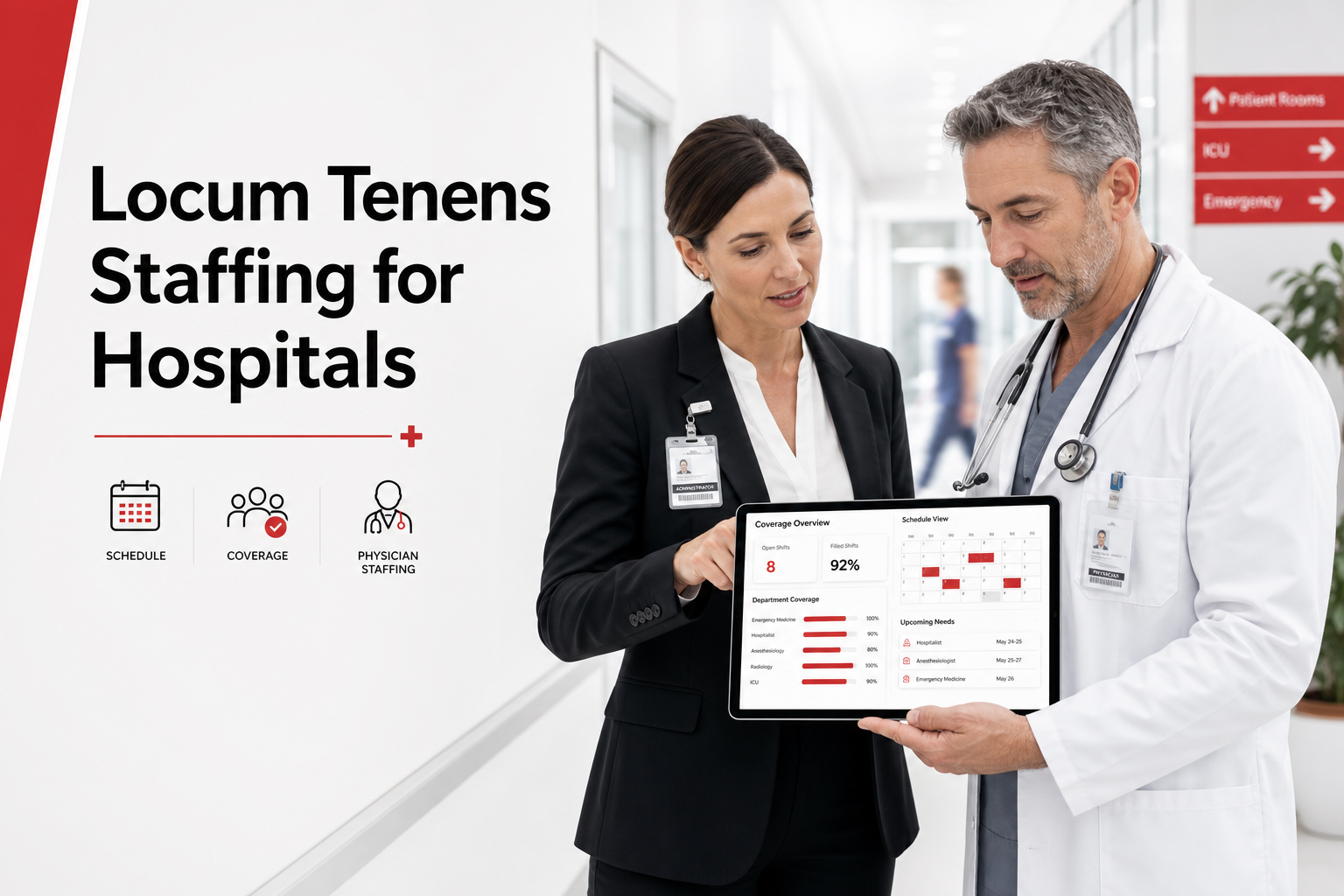
At 6:15 on a Monday morning, a hospital COO gets the call no one wants. A physician’s leave has been extended. Clinic schedules are already full. Inpatient coverage is thin. Referral backlogs are growing. And the revenue impact is only part of the problem. The bigger risk is access: delayed care, overloaded teams, and frustrated patients who may not wait.
That scenario is no longer unusual. For many hospitals, physician vacancies are no longer isolated HR issues. They have become operational issues that affect throughput, quality, staff morale, and patient experience. That is exactly why locum tenens staffing has moved out of the “temporary fix” category and into strategic workforce planning.
### **The conversation around physician coverage has changed**
For years, some health systems treated locum tenens as a last resort. If a physician resigned, retired, or went on leave, the organization would try to absorb the gap internally first. The assumption was that asking employed physicians to stretch a little further would be cheaper and simpler.
In today’s environment, that math is changing.
Hospitals are managing sustained workforce shortages, rising demand, and higher expectations around access. The AHA’s 2026 workforce scan points to a market where staffing models are being redesigned, not just patched. Meanwhile, physician burnout remains a real leadership concern, especially in high-pressure specialties and hard-to-recruit markets.
When a vacancy forces your employed team to absorb extra call, extra clinic time, or extra inpatient coverage, the hidden cost adds up fast. Burnout rises. Retention risk grows. Patient wait times lengthen. Leadership spends more time firefighting than planning.
That is why locum tenens staffing works best when it is viewed as a continuity strategy.
### **What locum tenens staffing really solves**
**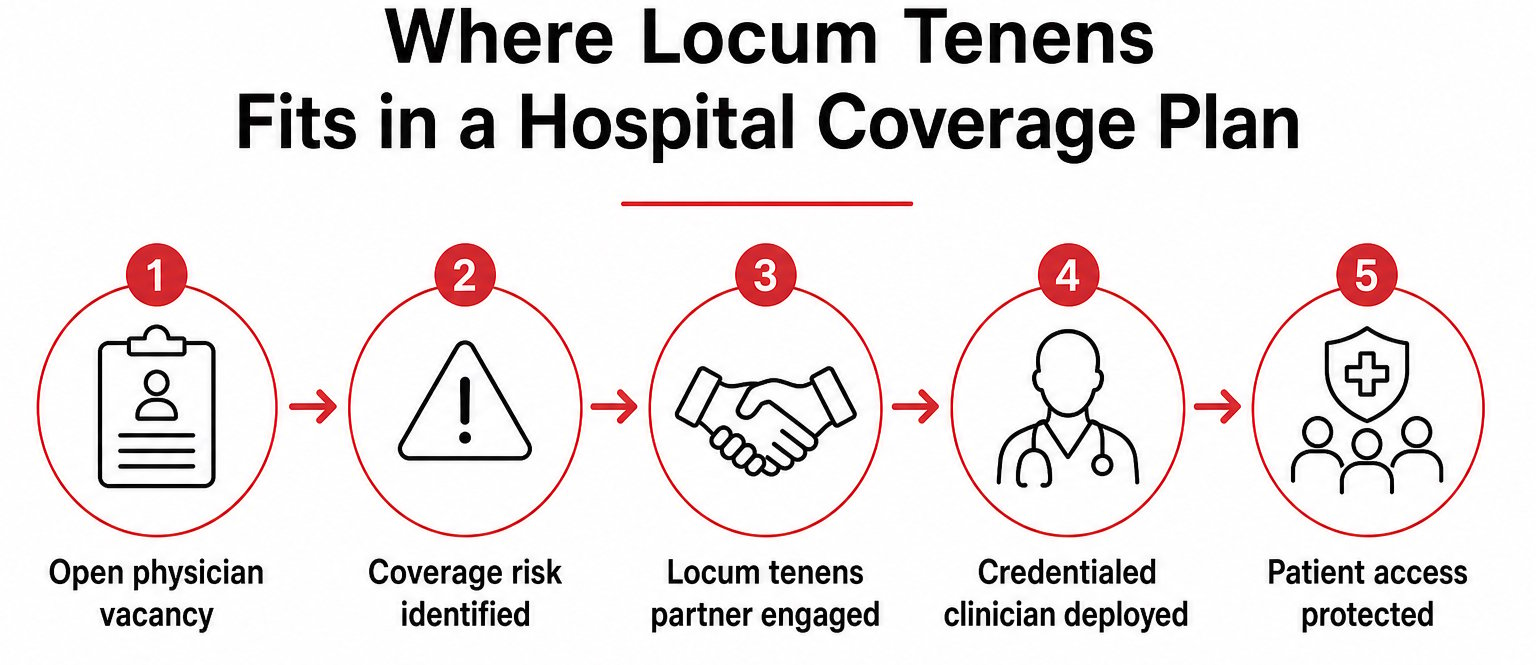**
Locum tenens staffing is often described as a way to “fill a gap,” but that definition is too narrow. The real value is business continuity.
A strong locum strategy helps hospitals:
That last point matters more than many leaders admit. A rushed physician hire can create downstream problems that last far longer than a temporary coverage assignment. When hospitals use locum support well, they create breathing room to recruit carefully instead of reactively.
### **Where hospital leaders feel the impact first**
**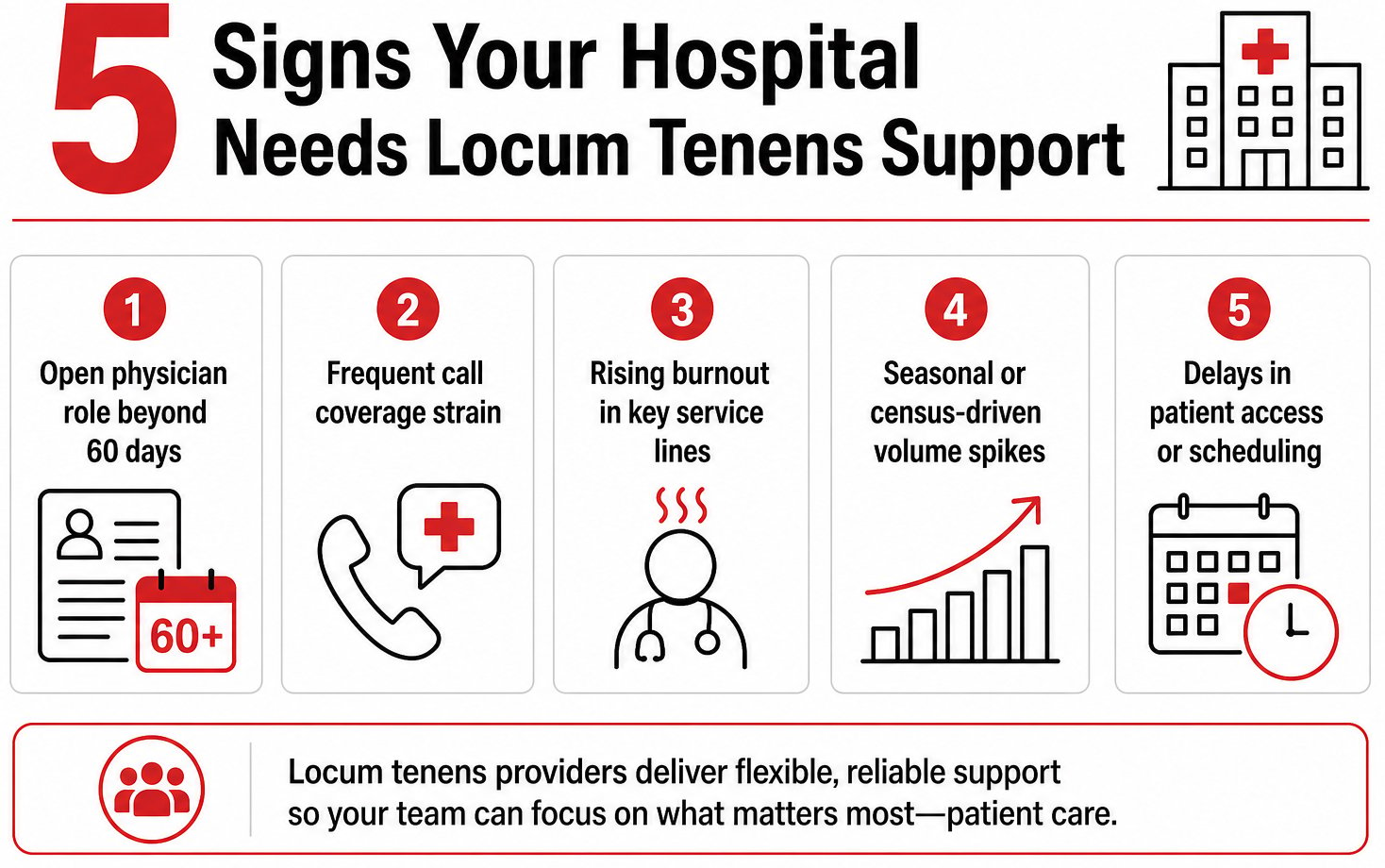**
Not every staffing gap becomes a crisis. But some coverage issues show up almost immediately in operations.
**Service-line disruption**
If even one specialist is unavailable in a smaller market or tightly staffed department, clinic access can tighten within days. Elective procedures may be delayed. Call schedules get unstable. Medical staff frustration builds quickly.
**Revenue leakage**
An open physician role is not just a labor issue. It can lead to lost visits, reduced procedural volume, slower patient movement, and more referrals leaving the system.
**Team fatigue**
When hospitals solve every gap by leaning harder on existing physicians, the short-term solution can create a long-term retention problem. Coverage strain has a way of spreading across the care team.
**Reputation risk**
Patients notice when it takes too long to get an appointment. So do referring providers. Access problems eventually become market problems.
### **When locum tenens makes the most strategic sense**
**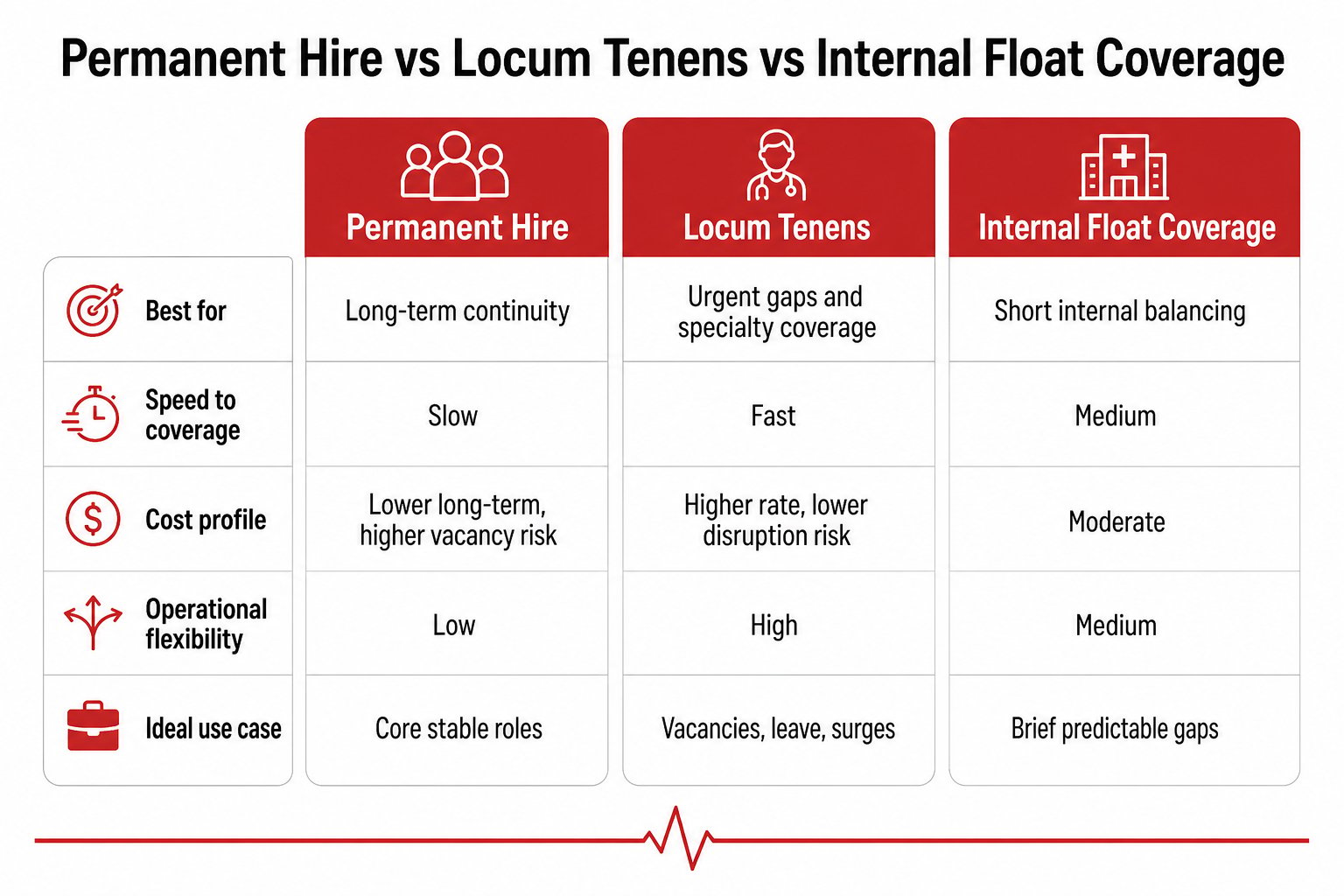**
Locum tenens is not the answer to every workforce challenge. But it is the right move in several common situations.
### **During a long recruiting cycle**
Some physician roles take months to fill, especially in rural markets, high-demand specialties, or less geographically competitive regions. Locum coverage keeps care delivery stable while the search continues.
### **During planned or unplanned leave**
Parental leave, medical leave, military leave, and sudden departures can all create immediate exposure. A prepared locum partner reduces disruption.
### **During growth or seasonal demand shifts**
When a hospital expands a specialty line, opens a new care site, or experiences a temporary volume increase, locum support can help leadership test demand without overcommitting too early.
### **When internal coverage is already strained**
If your employed team is already stretched, asking them to “cover just a little longer” is usually not a neutral decision. It may protect the schedule this month while damaging retention next quarter.
### **What separates effective locum staffing from expensive stopgaps**
**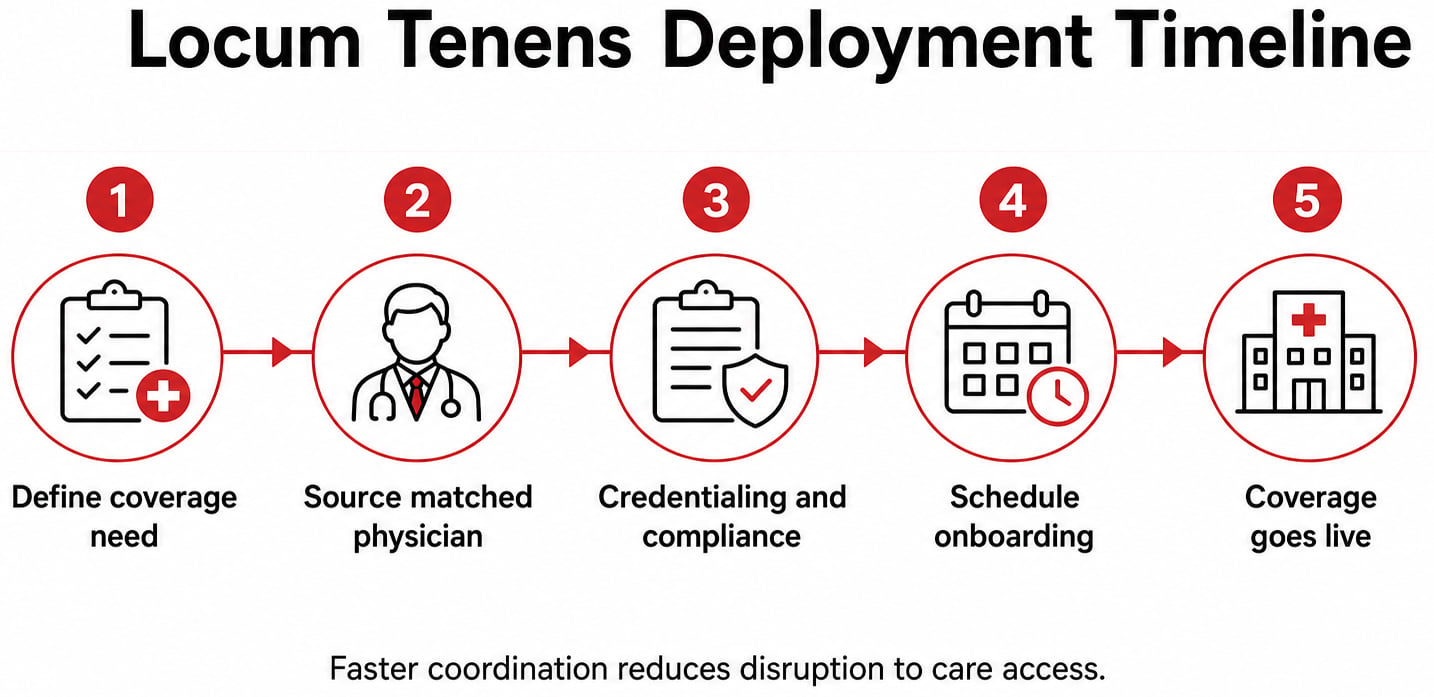**
Not all locum tenens programs perform the same way. The difference usually comes down to planning, fit, and execution.
The best outcomes happen when hospitals start with a clear operational brief. That means defining not just the specialty, but the schedule structure, patient mix, credentialing requirements, handoff needs, and what success looks like for the assignment.
It also helps to work with a staffing partner that understands the realities behind the requisition. A vacancy in emergency medicine has different operational stakes than one in behavioral health, radiology, or hospitalist coverage. The recruiter who understands those differences can move faster and match better.
Hospitals should also ask a practical question early: is this a bridge to a permanent hire, a recurring seasonal need, or an ongoing flexible coverage model? The answer changes how you source, onboard, and evaluate talent.
### **How to evaluate the real ROI**
Some leaders hesitate at locum rates because they compare them only to physician salary. That is an incomplete comparison.
A better question is this: what is the cost of delayed access, cancelled procedures, physician burnout, referral leakage, and prolonged vacancy?
When viewed through that lens, locum tenens staffing often protects value in multiple ways at once:
That does not mean hospitals should use locums casually. It means they should evaluate them as an operational safeguard, not just a line-item premium.
### **The smartest hospitals are building locums into workforce strategy**
The market has moved past the idea that every staffing challenge can be solved through permanent hiring alone. Smart health systems are building more flexible workforce models that combine core employed staff, targeted contingent support, and stronger workforce planning.
Locum tenens staffing fits naturally into that model. It gives leaders a way to stay responsive without becoming reactive.
In other words, the question is no longer whether temporary physician staffing has a role in hospital operations. The question is whether your organization is using it early enough and strategically enough to protect care delivery before strain becomes disruption.
### **Final takeaway**
When a physician vacancy starts affecting access, morale, or service-line performance, the issue is bigger than recruiting. It is an operational stability problem.
Locum tenens staffing gives hospitals a practical way to protect continuity while making smarter long-term workforce decisions. Used well, it is not a stopgap. It is a stabilizer.
If your organization is facing open physician roles, hard-to-fill specialties, or rising coverage pressure, this is the right time to treat locum planning as part of workforce strategy rather than emergency response.
###### Tags:
[Healthcare Solutions](https://n2shealthcare.com/blog/tag/healthcare-solutions)
###### Share on:
### Leave Your Comment Here
```json
{
"@context" : "https://schema.org",
"@type" : "BlogPosting",
"author" : {
"@type" : "Person",
"name" : "Jacob Whitman",
"url" : "https://n2shealthcare.com/blog/author/jacob-whitman"
},
"dateModified" : "2026-05-29T14:15:18.918Z",
"datePublished" : "2026-05-29T14:15:18.000Z",
"headline" : "Why Locum Tenens Staffing Is Becoming a Strategic Lifeline for Hospitals",
"image" : [ "https://n2shealthcare.com/hubfs/Feature%20Image-1.jpg" ],
"mainEntityOfPage" : {
"@id" : "https://n2shealthcare.com/blog/why-locum-tenens-staffing-is-becoming-a-strategic-lifeline-for-hospitals",
"@type" : "WebPage"
},
"publisher" : {
"@type" : "Organization",
"logo" : {
"@type" : "ImageObject",
"url" : "https://n2shealthcare.com/hubfs/social-suggested-images/n2sindustrial.comhs-fshubfsN2S%20Logo%20copy%202-2.png"
},
"name" : "Net2Source Inc."
}
}
```